 This guide focuses on what a G.S. 35A guardian ad litem attorney should do in the first week after being appointed. Strategies are explored that will improve client representation and help attorneys better manage their workloads and stress. This guide highlights concrete steps that guardian ad litem attorneys can incorporate into their practices to hit the ground running early, including how to set up a file, client outreach, investigation tools, and report writing.
  This guide focuses on what parent attorneys in G.S. 7B juvenile abuse, neglect, and dependency proceedings should do in the first week after being appointed. Strategies are explored that will improve client representation and help attorneys better manage their workloads and stress; these strategies include the use of various templates—examples of which are included in the guide. This guide offers practical tips and highlights concrete steps that parent attorneys can incorporate into their practices to hit the ground running early, including setting up a file, reaching out to the client, conducting discovery, and preparing for court.
 Defense Motions and Notices in Superior Court is a practical guide to trial-level motions practice in North Carolina felony cases. There are entries on virtually all significant motions and notices that may need to be filed during a case, from pretrial to post-conviction. Each entry lists the authority for the motion, its basic concepts, applicable deadline, and any relevant practice pointers, along with links to related resources.
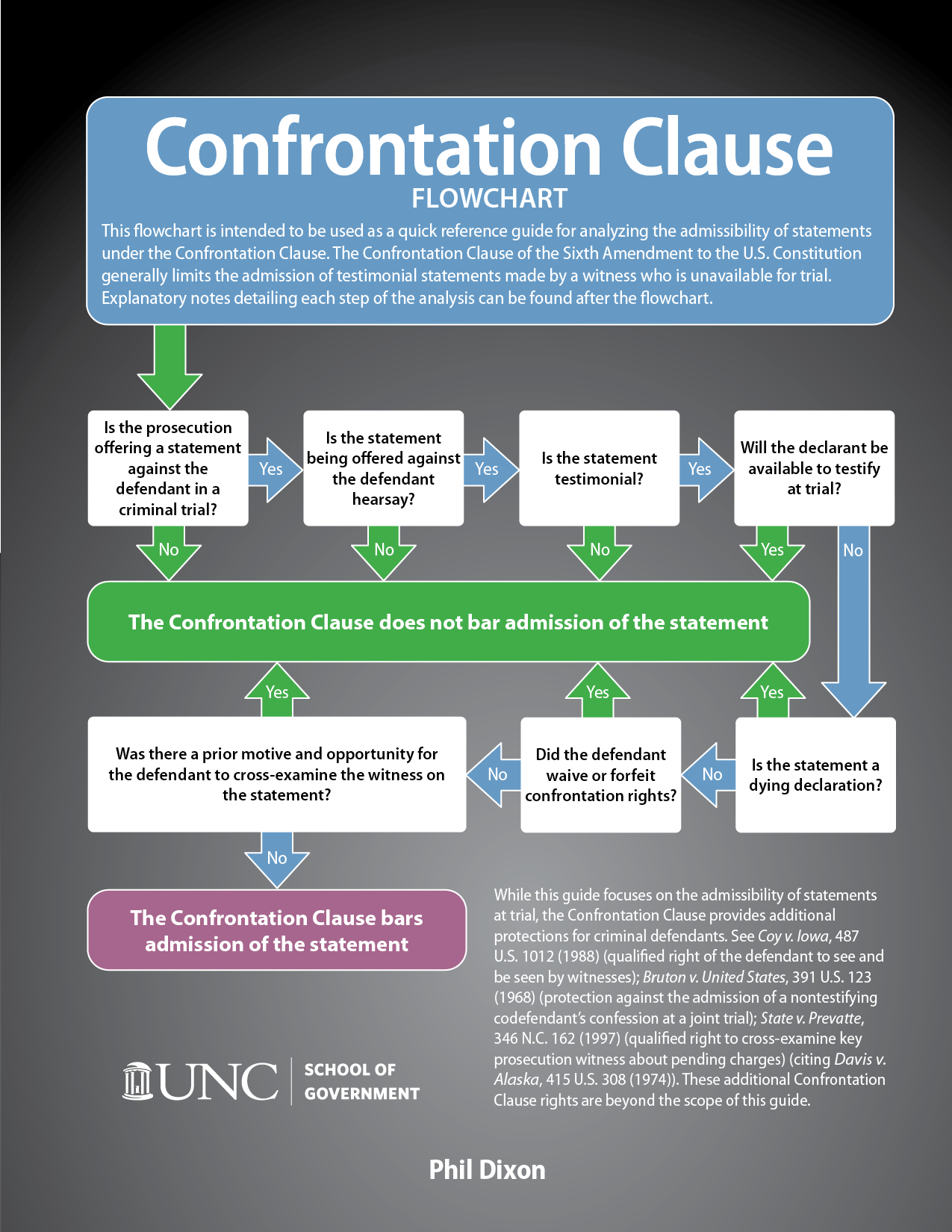 This flowchart is intended to be used as a quick reference guide for analyzing the admissibility of statements under the Confrontation Clause. The Confrontation Clause of the Sixth Amendment to the U.S. Constitution generally limits the admission of testimonial statements made by a witness who is unavailable for trial. Explanatory notes detailing each step of the analysis can be found after the flowchart.
Phil Dixon primarily works with public defenders and defense lawyers.
He joined the School of Government in 2017. Previously, he worked as a defense lawyer in eastern North Carolina for over eight years. During that time, he represented criminal defendants and juveniles charged with all types of crimes at the trial level.
In 2023, he was named director of the School’s Public Defense Education group. In collaboration with Indigent Defense Services, he works to provide training and consultation to defenders and other court system actors, as well as to research and write on criminal law and related issues.
He earned a bachelor's degree from UNC-Chapel Hill and a law degree with highest honors from North Carolina Central University.